Weighing Teds Woodworking vs free woodworking plans side by side is a sensible step before you spend anything. Free plan sites and single plan books each suit a certain kind of builder, and the library suits another. This comparison looks at where the library is stronger, where a free or single plan still makes sense, and what the trade-offs look like for a home workshop.
Compare the library with your own list
Count the projects you plan to build, then set them against one payment of $67.
See the Library ContentsRetailer: ClickBank · checkout total shown before you pay
Teds Woodworking vs free woodworking plans: the trade-offs
Free plans are everywhere, and that is their great strength. You can look at a single design, see whether its drawings make sense to you and start a small project the same day. The library works differently. It offers a catalogue you search, with cut lists, materials lists and two file types in one members area. Neither approach is the universal answer, so the useful question is which one matches the number and size of your projects.
What free online plans do well
Free online plans suit a builder who wants one small project, such as a planter or a spice rack, and who is comfortable filling small gaps from experience. You see the plan before you commit to anything, which is a real advantage for a first look. The downside is variation. Plans differ from one source to the next in detail, format and completeness, so you may need to check each one for a cut list and a materials list before you start.
What a single plan book offers
A single plan book goes deep on one project. It can explain a build from start to finish, with photographs of the stages, a parts list and a set of drawings in one bound volume. That depth is valuable when a project is large and you want everything in one place. The limit is scope: each new project usually means another book, so a list of several builds means several purchases to track.
Where the library stands out
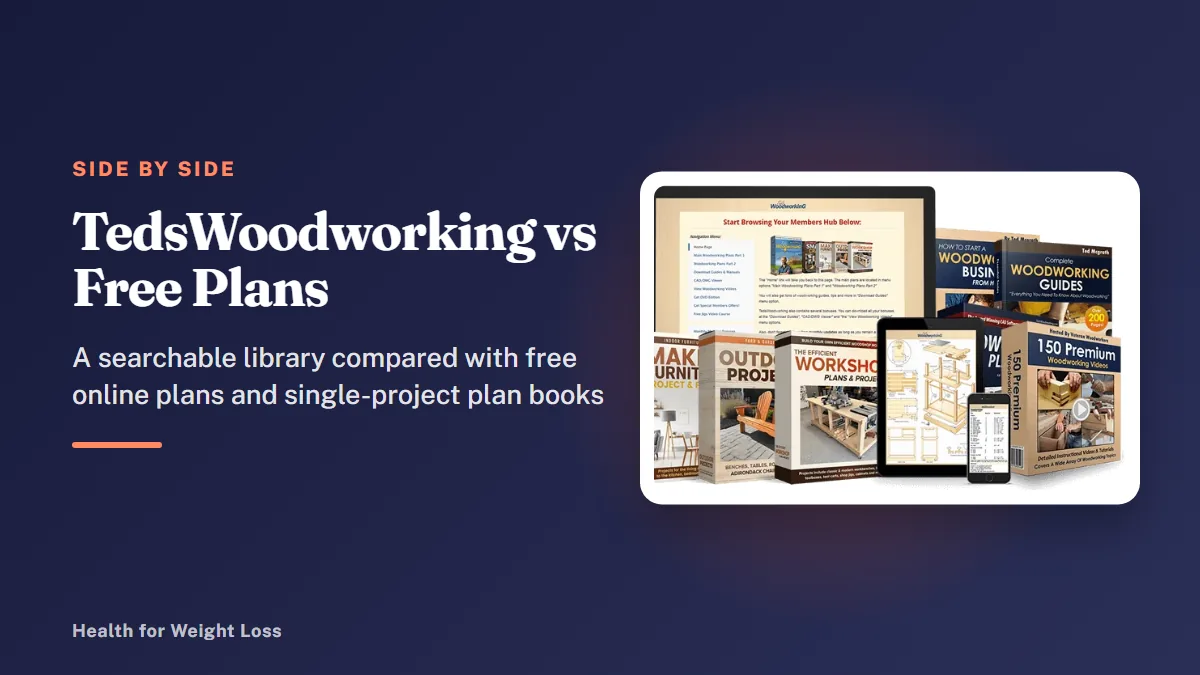
The library’s main advantage is breadth inside one members area. The seller describes a search by keyword, category and skill level, so a single session can cover furniture, storage, outdoor projects and workshop helpers. Each plan comes with a cut list, a materials list and exploded-view drawings, per the seller. The plans are offered as PDF and DWG, so you can print one and open another in the bundled viewer.
The seller also adds new plans monthly, and it offers a custom request form for plans that are not yet in the catalogue. Those two features matter most to a builder who expects to keep going after the first project.
| Question | Free online plans | Single plan book | Teds Woodworking library |
|---|---|---|---|
| Scope | One design per source | One project per book | Many designs in one members area |
| Lists | Varies by source | A parts list in the book | Cut and materials lists, per the seller |
| File types | Varies by source | Printed pages | PDF and DWG, per the seller |
| New designs | Varies by source | Not applicable | Added monthly, per the seller |
| Refund route | Varies by source | Varies by seller | 60-day money-back guarantee |
Where the library is weaker
The library is not the right tool for every builder. If you want one small project and nothing more, a free plan may cover it, and the library’s breadth then goes unused. The library also does not come with a building-code approval, and most plans expect a table saw, a drill, clamps and a sander, per the seller. A builder without those tools will need to add them or pick plans that need less.
The seller lists $67, one payment, for lifetime access to the plan library (seller’s terms). That single charge pays for the whole catalogue, which suits a long list of projects and sits poorly with a single shelf.
Choosing between the options
Start with your project count. If you expect one or two small builds this year, free plans or a single book may cover your needs without any charge. If you expect a steady stream of projects, a library with search, lists and monthly additions can save time on each new idea. Either way, look for a cut list and a materials list before you buy lumber, because those two lists do most of the planning work.
If the library fits your list
Search the catalogue by category and skill level before you commit.
Search the Plan LibraryOne payment of $67 · keep your confirmation email
For the product facts in one place, the TedsWoodworking hub lists them side by side, and the comparison page sets the library against the other options in a shorter table. The what-is walkthrough explains the order from sign-in to download.
Weighing the convenience factor
Convenience counts for something, and it is easy to undervalue. A free plan that you must track down, check, redraw and re-check can take more of your evening than a paid catalogue would. A library puts the search, the lists and the drawings in one place, so each new project starts from the same screen. That benefit is real, but it only matters if you actually intend to keep building. For a single weekend project, the saving may be negligible either way.
A checklist for the comparison
Run each option through the same short list before you settle on one. First, count the projects on your list for the next year. Second, check the tools you already own against the tools the plan expects. Third, look at the format: printed sheets, PDF files or DWG drawings, and which of those your workflow can use. Fourth, check how the option handles updates, since a library adds designs while a single plan does not change. Fifth, read the refund route, because some sources state one and some do not.
Going through the list in order keeps the comparison honest. Write each answer in a single line, so the options can be read side by side at a glance, and note which answers rest on the seller’s word rather than on something you can see for yourself. A free plan that wins on the first two points may lose on the fourth, and a library that wins on breadth may cost more time than a single book on a project you already know well.
A quick self-check also helps. If your list is one project long, a single source is likely enough. If your list runs to several, a searchable catalogue with lists in each plan starts to earn its keep.
Run your list through the library
Check the catalogue against your projects before you pay the single $67 charge.
Check the CatalogueRetailer: ClickBank · confirm the total at checkout
The TedsWoodworking hub lists the product facts in one place, which makes it easy to compare against the free and single-book options you already have on hand.
How the library holds up over time
A library earns its keep through repeat use. The seller describes monthly additions and a custom request form, so the catalogue grows as you work through it. A single book or a free plan does not grow in the same way, and each new project starts a fresh search. If you plan to build steadily through a year, that difference becomes the main reason to compare the two approaches at all.
Our full review explains the editorial score, and the PDF guide covers how the files open, print and work with the viewer.
Weigh the list, then open the library
A searchable catalogue, cut lists and two file types, for one payment of $67.
Open the Library NowClickBank is the retailer for this order