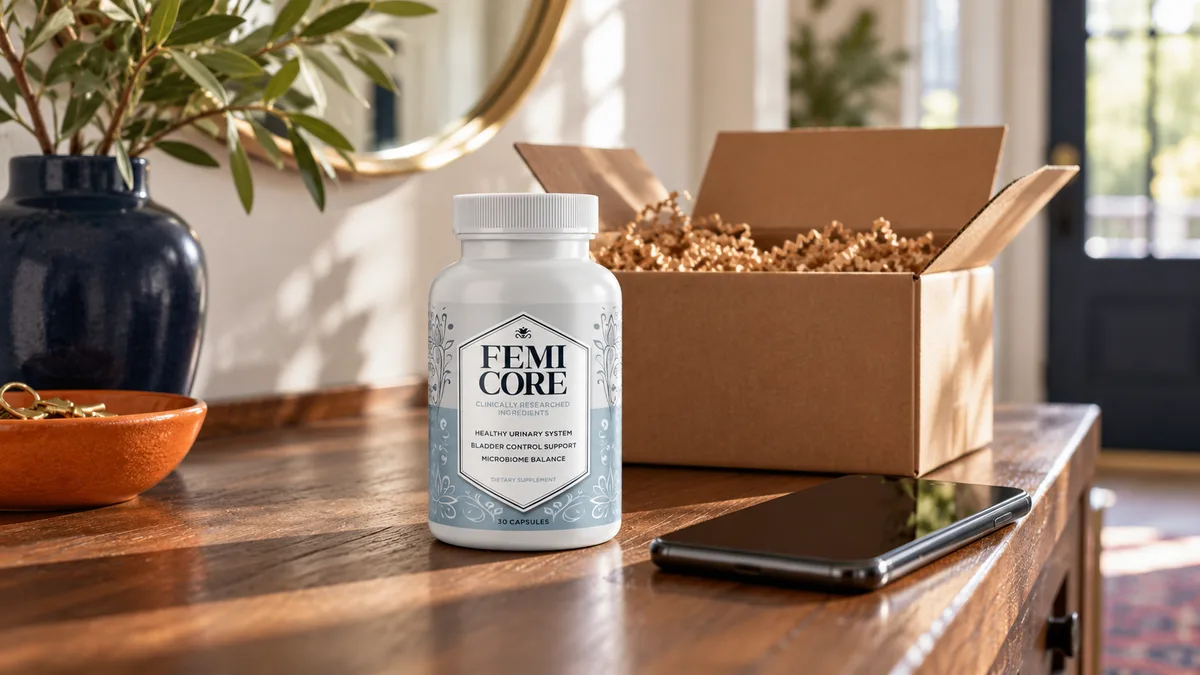
Who should use FemiCore comes down mostly to the kind of bladder trouble you have. The formula is built around urgency, frequent trips and night-time waking, the pattern many women notice after 40 and especially after menopause. It is a poor match for leaks caused by coughing or lifting, and some women should not take it at all. This guide helps you work out which group you are in.
Before anything else, it helps to know what the capsule can and cannot do. Our article on whether FemiCore really works looks at the evidence, and the FemiCore side effects guide covers safety ingredient by ingredient. Here the focus is fit: matching the product to the person.
Sound like your symptoms?
FemiCore is designed for urgency, frequency and night-time trips. One capsule a day, 60-day money-back guarantee.
See How FemiCore WorksOpens the official FemiCore website. Affiliate link: we may earn a commission at no extra cost to you.
First, name your type of bladder problem
Doctors sort bladder leaks into a few types, and the type matters more than your age or the size of the leak. Most women can recognize theirs from this table.
| Type | What it feels like | Typical triggers | Main driver |
|---|---|---|---|
| Urge | A sudden, strong need to go that is hard to put off; sometimes leaking on the way | Running water, cold, arriving home, key in the door | Bladder signaling and irritation |
| Frequency and nocturia | Going far more often than you used to; waking two or more times a night | Often no clear trigger | Bladder signaling, fluid habits, sleep |
| Stress | Small leaks with physical effort | Coughing, sneezing, laughing, lifting, jumping | Weak pelvic floor or urethral support |
| Mixed | Some of both urge and stress | Both sets of triggers | Combination |
If your answer is urge, frequency or mixed, keep reading the next section. If it is pure stress, jump ahead to the section on who is unlikely to benefit.
Who FemiCore is designed for
The manufacturer positions FemiCore for adult women who want bladder and urinary support. Looking at the formula, it fits these situations best:
- Urge-type symptoms. The bladder is not sterile; it has its own community of bacteria. A 2014 study found that women with urgency incontinence had a different urinary microbiome, with Lactobacillus less dominant, than women without it. FemiCore’s five Lactobacillus strains are aimed at that balance. Whether a capsule shifts it enough to change symptoms has not been tested in this product.
- Frequent daytime trips. Frequency usually travels with urgency, so the same reasoning applies.
- Waking at night to urinate. Night-time trips are one of the most disruptive symptoms. Some causes are bladder related; others, such as evening fluid intake, some medicines and sleep problems, are not.
- Women over 40, and particularly after menopause. Falling estrogen changes the vaginal and urinary environment, and Lactobacillus species tend to become less dominant. This is the group the product most clearly targets.
- Women with a history of urinary infections who want general support. Cranberry and L. crispatus both have research in recurrent UTI prevention. This is about prevention between infections. An active infection needs medical treatment.
Who should use FemiCore: a three-question self-check
Answer these honestly. They take a minute.
- Is your main problem urgency, frequency or night-time waking, rather than leaks with effort? If yes, you are in the product’s target group.
- Have you ruled out the red flags below with a clinician, or do you have none of them? If yes, a supplement is a reasonable thing to try.
- Are you free of the “ask a doctor first” conditions, or have you already had that conversation? If yes, nothing in the formula is an obvious problem for you.
Three yeses make you a reasonable candidate. A no on the first question means your money is probably better spent elsewhere first. A no on the second or third means a conversation with a clinician comes before any purchase.
Three yeses? Check the current packages
One-time purchases only, no subscription. Free US shipping on 3 and 6 bottles.
Check FemiCore Official PriceOpens the official FemiCore website. Affiliate link: we may earn a commission at no extra cost to you.
Who is unlikely to benefit from FemiCore
Women with pure stress incontinence. If you only leak when you cough, sneeze, laugh or lift, the problem is mechanical. The muscles and tissues that hold the urethra closed are not coping with sudden pressure. Probiotics, cranberry and herbs do not strengthen muscle. The 2018 Cochrane review of pelvic floor muscle training found women who trained were more likely to report cure or improvement than untreated women, and the effect was clearest for stress incontinence. Start there, ideally with a pelvic health physiotherapist who can check your technique.
Anyone expecting a fast fix. Changes in the microbiome happen over weeks. If you need control for an event next week, a supplement will not deliver it.
Men. FemiCore is formulated for women. Male bladder symptoms are often linked to the prostate and deserve a medical assessment.
People whose symptoms come from another cause. Heavy caffeine or alcohol intake, a very high fluid intake, some blood pressure tablets that act as water pills, constipation and poorly controlled blood sugar can all drive frequency. Fixing the cause works better than adding a capsule.
Who should not use FemiCore, or should ask a doctor first
Some people should avoid the product outright, and others need a professional check before starting. Our side effects guide explains the ingredient reasons in detail; this is the short version.
Do not use:
- Pregnant or trying to conceive (berberine, bearberry)
- Breastfeeding (berberine, bearberry)
- Under 18 (it is designed and dosed for adults)
Ask a doctor or pharmacist first:
- Kidney disease (bearberry is traditionally avoided)
- Diabetes medicines (berberine lowers blood sugar)
- Warfarin (cranberry case reports)
- Other regular prescriptions (berberine slows two liver enzymes that clear many drugs)
- A weakened immune system, for example during chemotherapy or after a transplant (live bacteria)
The FemiCore fit table
| Good fit | Ask a doctor first | Not for you |
|---|---|---|
| Woman 40+ with urgency or frequency | Kidney disease | Pregnant or trying to conceive |
| Waking at night to urinate, no red flags | Taking diabetes medication | Breastfeeding |
| After menopause, wants microbiome support | Taking warfarin or other regular prescriptions | Under 18 |
| Mixed incontinence, also doing pelvic floor exercises | Weakened immune system | Pure stress incontinence as the only problem |
| History of recurrent UTIs, currently clear | Planning to take it for many months (bearberry) | Blood in urine, fever, pain or sudden leaks (see a doctor) |
In the good-fit column?
Try it with the 60-day money-back guarantee. Return all bottles, empty or full, if you see no change.
Visit Official Website (60-Day Guarantee)Opens the official FemiCore website. Affiliate link: we may earn a commission at no extra cost to you.
Symptoms that need a doctor, not a supplement
Whatever group you fall into, these symptoms change the picture. Book an appointment instead of ordering anything:
- Blood in your urine, pink, red or cola-colored, even once
- Pain or burning when you pass urine
- Fever or chills, especially with pain in your side or back
- Sudden onset, meaning leaking or urgency that appeared over days rather than building over months
- Difficulty emptying, a weak stream or a feeling that the bladder never empties
These can point to infection, stones, a kidney problem or, rarely, something more serious. A supplement could mask the early signs while the cause goes untreated.
Where weight fits into bladder control
Carrying extra weight around the middle presses on the bladder and pelvic floor every time you move. In the PRIDE trial, overweight women who lost about 8 percent of their body weight over six months cut their weekly incontinence episodes by 47 percent, against 28 percent in the comparison group. That is a larger effect than any bladder supplement has shown.
So if you are in the good-fit group and also carrying extra weight, the two approaches work side by side. Some FemiCore ingredients, berberine and L. gasseri, have their own metabolic research, but FemiCore is not a weight-loss product. A steady plan such as our 12-week walking program helps both your weight and your pelvic floor.
Before you start
Get the type confirmed
This guide is general information and cannot replace a personal assessment. If you are pregnant or breastfeeding, have kidney disease, take regular medication or have any of the red-flag symptoms above, speak to your doctor first. A continence nurse or pelvic health physiotherapist can confirm your type of incontinence, which is the most useful single step in choosing what to try.
Judge it fairly if you are a good fit
- Track before you start. Three days of noting trips, night-time waking and urgent moments gives you a baseline.
- Take it consistently. One capsule each morning with water, every day.
- Keep other things steady. If you change your caffeine intake in the same month, you will not know what helped.
- Review around day 50 to 55. The guarantee runs 60 days from delivery, so decide while you can still return the bottles.
- Keep doing pelvic floor exercises. They help almost every type of incontinence and cost nothing.
Bottom line
FemiCore is best suited to adult women, mostly over 40 and often after menopause, whose main problems are urgency, frequent trips and waking at night. It is a weak choice for pure stress incontinence, where pelvic floor training should come first. It is not for pregnancy, breastfeeding or anyone under 18. Kidney disease, regular medication and a weakened immune system call for a doctor’s view first. If you are in the good-fit column, our FemiCore product page summarizes the formula and packages.
A good match for your symptoms?
From $49 to $79 a bottle depending on package, one capsule a day, covered by the 60-day guarantee.
See Today’s FemiCore PackagesOpens the official FemiCore website. Affiliate link: we may earn a commission at no extra cost to you.