If you are looking into Water Freedom System complaints, the useful move is to turn each concern into a specific question and check it against the seller’s own statements. Below we take six questions that come up before an order, from the video-led sales page to the refund steps. Each gets a plain answer, and each answer names what the seller leaves out.
Put your questions to the order page
Digital guide at $39.69 as one payment, or printed book at $49.64 with US shipping.
Check the order routeClickBank is the retailer · keep your confirmation email
Water Freedom System complaints, reduced to six questions
Question one: is the pitch only a video?
The main presentation is video, which shapes everything else. The selling page revolves around it, so a fair reading of the offer has to include what the presentation says. Pause the video wherever it names a figure, a part or a step, and write each one down. Those notes make the later comparison with the seller’s written pages far quicker.
A disclaimer on the seller’s site concedes that people in the presentation could be actors or staged re-enactments, and that the author writes under a pen name. Keep the story in the category of the seller’s material rather than independent evidence.
Keep a written log of the answers you receive, with the date and the page each came from. A short log helps when you compare the pages with the checkout, and it keeps your questions in one place rather than scattered across emails.
Question two: what does the guide actually list?
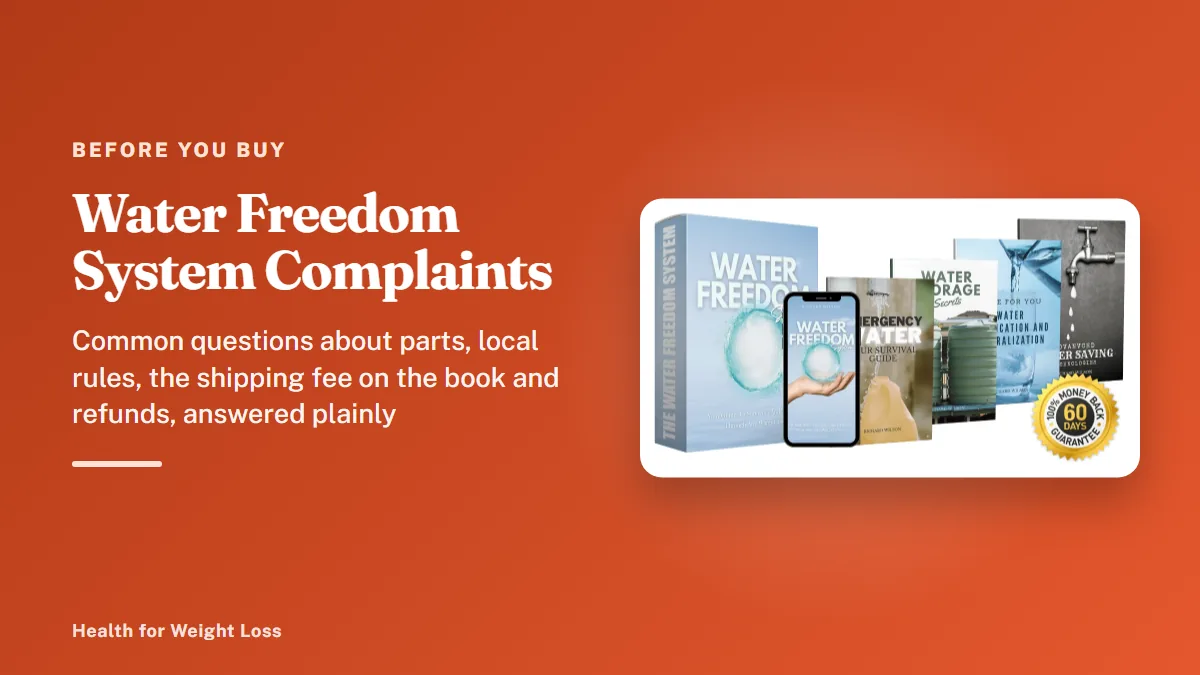
The guide reaches you as PDF and video material. Per the support pages, the digital set holds a Beginner Quick-Start Guide plus a one-file materials list. Reading it needs a screen-based device able to show PDF pages and run video clips. The Quick-Start is described as the place to begin, so reading it first shows which parts of the materials list apply to you. The seller also refers to four bonus guides on water topics, and we do not print their titles or show their covers.
Ask whether those pieces match what you need. If you expect a finished product or a supplier list, the seller’s contents will not supply either. The same contents appear together on our overview page. If the guide asks for electrical work, that belongs on your checklist before you buy, not after.
Question three: where are the parts and the tools?
This question stays open on the seller’s pages. Nothing there names the components, the equipment or a dollar amount for supplies. The guide may cover them, but the sales material never shows what a builder should expect to gather. Until you have opened the materials inventory, avoid assuming that a parts bill will be small or large.
That gap is real, and it is one reason our editorial score sits at 2.8 out of 5. The sales presentation promises a build, yet the public pages stop short of the details a builder would need. Write down each specific gap you find, such as a missing tools list or an unclear source for the materials, and raise those questions with the seller via its contact page before you pay.
Open the materials inventory first
Review the Quick-Start and the inventory before committing to any build.
See what is includedDigital access after checkout · ClickBank order route
Question four: how do you use the water safely?
Anything a home-made unit collects needs treating or checking before it reaches a glass, and the quantity shifts with moisture and heat in the room. The seller’s pages offer no treatment guidance. Nothing in the sales material explains how the water should be handled, stored or verified, so that job falls to you and to local guidance.
Keep the electrical side in view too. Wiring and cooling hardware can deliver shocks or start fires. Bring in qualified help, follow local codes and check the rules that apply to your home before any change. Those checks come before the water question, not after it. The safety section of the catalogue lists the same water and wiring checks in one place.
Question five: what does postage on the printed book involve?
The printed book goes only to US addresses, and the shipping page on the seller’s site puts postage at $9.95. With the $39.69 price, the printed route totals $49.64. Dispatch needs two or three working days, and USPS may take as long as ten business days to deliver.
Postage is not refundable, even under the guarantee. If you keep the book and seek a refund, the postage line remains yours, the seller says. If you return the book, contact the seller first for instructions. The digital route carries no postage.
If the printed book matters to you, weigh the postage against the digital route. Both routes deliver the same guide, so postage is the sole difference in price. Write down the delivery window the seller quotes, so you know when the parcel is due.
Question six: how do the refund steps work?
The order carries a 60-day money-back guarantee, a promise made by the seller rather than by us. Keep your confirmation email, then contact the seller at its listed address, naming yourself, quoting the order number and using Refund Request as the subject line. The seller says it handles requests within 48 hours, after which the bank needs three to five working days.
Hold off on any card dispute while the seller works through the request, because the seller would prefer that route stay closed. After a refund, the digital files may no longer open for you. When you write, keep the message short and factual. Your full name, the order number, the subject line and the route you bought should be enough for the seller to act. The money-back guarantee article goes through the same steps at greater length.
Learn the refund sequence first
Know the email route, the order number and the 48-hour processing line.
Continue to the order pageClickBank checkout · a 60-day money-back guarantee applies
Reading the questions as a whole
Taken together, the six questions point one way. The payment and refund routes are clear and written down. The device, the parts and the handling of the water are not. A reader who wants a finished answer on those last points will find the seller’s pages thin, so the questions are worth asking before checkout rather than after it.
Our editorial review sets out how that gap feeds into the score, and the PDF article explains the file side, including the equipment you need to read it.
None of these questions is a reason to panic, and none of them proves the offer fails. They are the points the seller’s pages leave for you to settle. A reader who writes them down, works through them and then compares the answers with the checkout is in a far better position than one who reads only the headline price.
Before you order
Write your own list before opening the checkout. Note the components and equipment still unanswered, the water-handling plan for your household, the local rules that apply to your home and the format you want. Then hold that list against the seller’s pages and the guide. Our overview page is a good starting point for that comparison, and the refund policy guide sets out the refund route in a single place.
Order once your list is answered
Pick the route, confirm the total and save the confirmation email.
Go to the guide checkoutSingle payment per route · ClickBank is the retailer