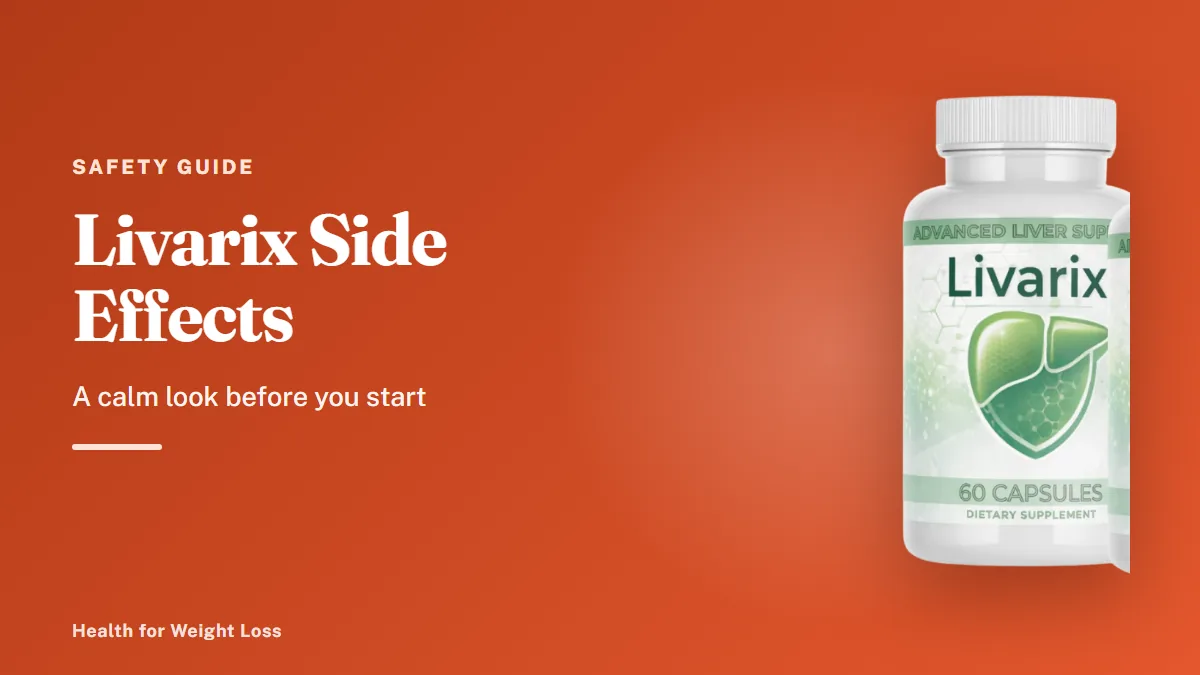
Livarix side effects are a sensible thing to think about before any new supplement, and the calmest path starts with your own doctor rather than a product page. This guide keeps the safety picture clear. It covers what the seller advises, which warning signs call for medical care rather than a capsule, which medicines and allergies deserve a second look and who should ask first. Two capsules a day with food is the whole routine, so most of the planning is about the people involved, not the bottle.
Plan your first doctor conversation
Bring the bottle details, the ingredient list and the pack you are considering.
Read the Pack OptionsCheckout via BuyGoods · 60-day money-back guarantee
Livarix side effects: start the talk with your doctor
The seller’s FAQ gives one clear instruction: show the bottle to your doctor before taking it, particularly if you are on any medication. That line matters most for people with an existing prescription, and it costs nothing to follow. Bring the label details with you. The front reads Advanced Liver Support, with 60 Capsules and Dietary Supplement beneath, and the ingredient list with its listed amounts is set out in our ingredients guide.
A doctor who sees the full list of ingredients can weigh it against your history in a few minutes. That conversation is the most useful step before the first capsule, and it is worth having even if you feel well.
What a calm first conversation sounds like
A useful first talk with your doctor is short and specific. You name the product, read out the ingredient list, describe the routine of two capsules a day with food and say which medicines you already take. Your doctor can then say whether the combination is sensible for you, whether any test should come first and which signs would make them want to hear from you. Leave the visit with a clear answer rather than a general reassurance, and write that answer down with the date.
Warning signs that need a clinician
Some signs point to a medical question rather than a supplement question. Yellowing of the skin or the whites of the eyes, urine that turns dark, pain under the upper right side of the abdomen and abnormal liver blood test results all belong with a clinician. If any of these appear, contact a doctor promptly. A supplement does not take the place of that visit, and no capsule should be used to explain away a symptom that a doctor has not reviewed.
Medicines and interactions worth reviewing
Keep taking every prescribed medicine on its usual schedule unless your doctor tells you otherwise. Turmeric, ginger, artichoke and milk thistle are the four items this guide flags, because they can interact with some medicines. Blood thinners and diabetes medicines are the classes to raise first with your doctor, since the interaction question is most relevant there. Do not start the capsules and then change a prescription without a conversation about both.
Review the pack options with your doctor
Once your questions are answered, the six-bottle line is $49 a bottle with the bonus books attached.
Compare the Six-Bottle OrderPaid on the BuyGoods checkout · the 60-day money-back guarantee applies
Allergies, gallstones and pregnancy
Allergies deserve a plain check. Dandelion, artichoke and milk thistle all belong to the daisy or ragweed family, so anyone with a known sensitivity to that group should be careful with each of them and mention it to a doctor. Gallstones and bile-duct problems raise a separate question: artichoke and dandelion should be approved by a physician before use in those cases. Pregnant or nursing women should ask a doctor before the first dose, and that advice holds regardless of how familiar the ingredients look.
How this fits with your existing care
Think of the capsules as one more item on the list your clinician already keeps, rather than a separate decision you make alone. If you see a pharmacist for prescriptions, they can check the ingredient list against your current medicines in a few minutes. If you have a standing appointment for a condition you already manage, mention the bottle at that visit. The aim is simple: nothing about the routine should reach your body without someone who knows your history having seen it.
Who should ask a doctor first
Several groups should speak with a clinician before they begin. People on prescribed medicines, especially blood thinners or diabetes treatments, are the first group. Pregnant and nursing women are the second. Anyone with gallstones or a bile-duct condition, and anyone with a daisy or ragweed allergy, belongs on the list as well. If you are unsure whether you fit one of those descriptions, a short call to your doctor’s office settles the question.
What to keep on file after you order
A clear paper trail makes any later question easier to answer. Keep the confirmation email that arrives after payment, since it records the order. The seller’s terms include a 60-day money-back guarantee, and the returns page asks you to mail the product back using the Return and Refund Form you received with the order. Support is reached at [email protected], and the seller says it replies in less than 24 hours on weekdays, from 9:00 AM to 6:00 PM EST. The money-back guarantee guide sets out each return step.
For the same safety picture in the catalog, the Livarix safety page repeats these points, and the Livarix hub links the rest of our pages.
Start with the six-bottle pack
Ordered after your doctor check, the six-bottle line is $49 a bottle with shipping free in the US.
Start With Six BottlesOrder on the BuyGoods checkout · 60-day money-back guarantee
Keeping a simple log for your doctor
Before the first appointment, write down the date you began, the two-capsule routine, the other medicines you take and when you take them, and any change you notice afterwards. Bring the list along with the bottle. A written record lets your doctor see the whole picture rather than relying on memory, and it gives you one place to note anything unexpected before it slips your mind. The same note makes any later conversation with the seller’s support desk quicker, because the dates and the routine are already written down in one place.
Questions to take to your appointment
A few questions make the visit more useful. Does a daily two-capsule routine, taken in the morning with food, suit the medicines I already take? Do I react to any member of the daisy or ragweed family? Does a history of gallstones or a bile-duct condition change the answer for dandelion or artichoke? If I am pregnant or nursing, what should I do? Which warning signs should prompt a call to your office, and how quickly should I make that call?
Bring your list to the appointment
Your medicine list, the bottle details and the pack you are considering, all in one place.
View the Order OptionsOrder placed on BuyGoods · 60-day money-back guarantee
When something unexpected happens
If you notice a new symptom after starting, contact your doctor promptly. Say when it began, which part of the routine you were following and whether you take any other medicine. Do not change a prescription on your own in response to it. The warning signs listed above call for a clinician, and nothing in this guide takes the place of that conversation.
Why a calm plan beats a rushed order
Ordering in a hurry is the situation this guide is meant to slow down. Two capsules a day is a small routine, but the medicines around it deserve care. A calm plan keeps your doctor involved from the start and leaves your order records tidy for later, which is far easier than sorting out questions after the bottles have already arrived.
A calm way to start
Talk to a doctor, bring the bottle details, watch for the warning signs listed above and keep your order records together. If that plan fits your situation, the six-bottle pack gives the lowest per-bottle price on the grid, and its three bonus books come with it. Our how to take guide covers the daily routine so you can discuss it with your doctor in concrete terms.